
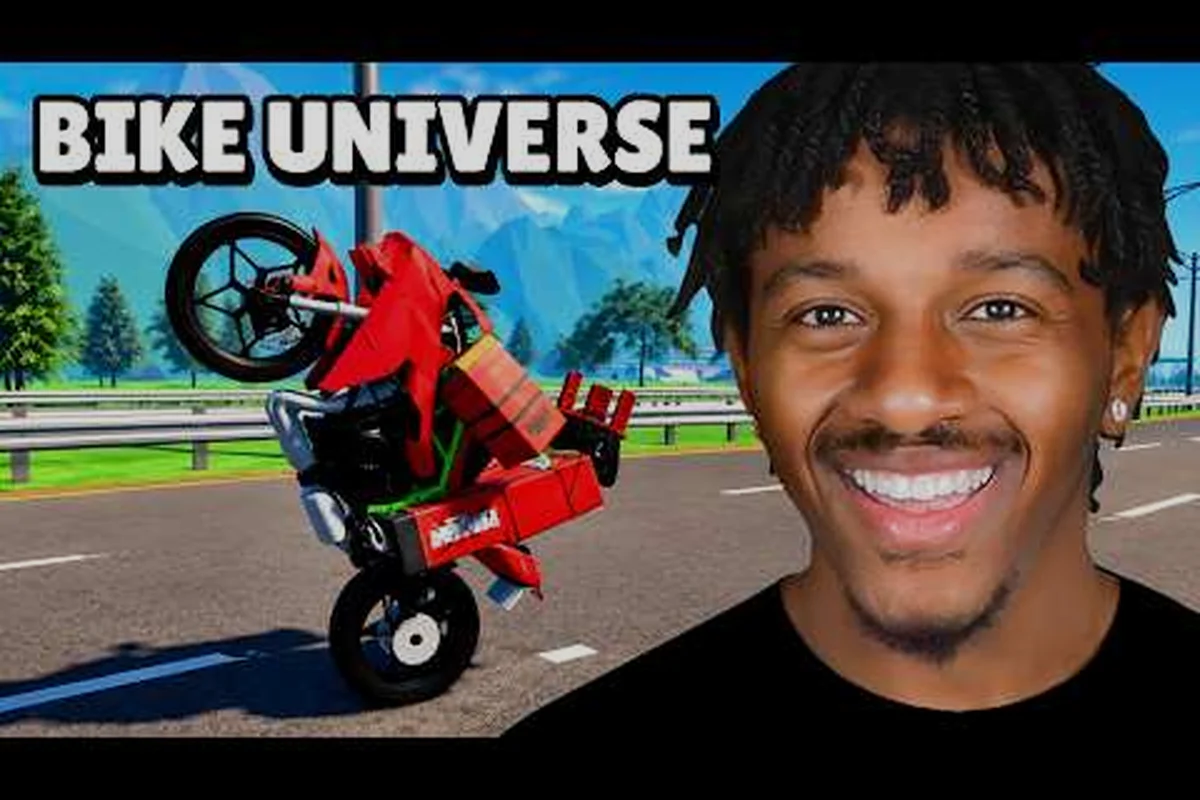
Wheelies, stoppies, and burnouts are the highest-paying actions a rider can perform, and most players leave real cash on the table because they treat each trick as an isolated button press instead of a chainable combo. The strongest payouts in this Roblox experience come from riders who link stunts back-to-back, holding balance, recovering lean angle, and using downhill momentum to set up the next move before the first one expires. If you can keep a wheelie rolling into a burnout, or bounce a stoppie straight into a flip, every meter of road turns into pure income, which is why serious grinders treat each bike like a freestyle rig rather than a delivery vehicle.
The official Bike Universe game page confirms that wheelies and tricks are core earning mechanics alongside steady riding, with a Dirt, Electric, and Pedal bike family available to grind. A late-September 2026 snapshot on that page reported roughly 13.1M+ visits, 48.9K active players, and 38K+ favorites, which means the trick meta is constantly being refined by tens of thousands of riders every week. The community-tested chain patterns in this guide combine the most reliable wheelie hold techniques, the cleanest stoppie-to-burnout transitions, and the input timing that experienced players use to keep their cash meter climbing. Read on to learn the exact inputs, the best bike families for each chain, and how to turn your next freestyle session into a serious payout run.
The Trick Economy: Why Wheelies, Stoppies, and Burnouts Pay So Well
Every stunt in Bike Universe is scored through a Trick Multiplier that scales with the duration and difficulty of the move, but the real money lives in how stunts overlap. A single wheelie pays a flat base amount per second, while a chain of three stunts activates the Stunt Combo Bonus, which can multiply your per-tick income by a noticeable margin. Community testing on the TonyCool coin guide shows that chained wheelie-to-burnout sessions regularly out-earn straight riding by a wide margin on the same map distance, which is why top earners spend most of their time in stunt mode rather than commuting.
The trick economy also rewards Variety Bonuses: hitting three different stunt types in a single run adds a flat bonus on top of the combo multiplier, so a wheelie-then-stoppie-then-burnout chain pays more than three wheelies in a row. Riders who learn to read the road and queue the right stunt for the right terrain pull in noticeably more cash per minute, because each section of the map has a natural rhythm that favors one trick over another. The a BADUCASS practice session demonstrates this rhythm, using long flat sections for chainable wheelies, short downhill dips for stoppie holds, and open intersections for full burnouts.
| Trick | Base Payout Profile | Best Terrain | Chain Friendliness |
|---|---|---|---|
| Wheelie | Steady per-second tick | Long flat roads, slight uphill | High — easy to extend |
| Stoppie | Burst payout on hold | Downhill ramps, brake zones | Medium — needs recovery time |
| Burnout | Flat high tick per second | Intersections, open pads | High — pairs with rear-wheel input |
| Flip / Spin | One-shot bonus | Air ramps, jumps | Low — breaks chains on landing |
Players who ignore the trick economy usually cap out at the base riding income (roughly 80–120 coins per minute on a standard map), while players who learn chains often double or triple their per-minute cash rate within a few hours of practice — and the gap widens further once Variety Bonuses are layered on top of Stunt Combo Bonus chains. A rider running a wheelie-to-stoppie-to-burnout rotation on terrain that matches each trick's payout profile (per the table above) routinely clears 300+ coins per minute, because every chain tick stacks the multiplier and every new stunt type adds a flat bonus on top.
Core Input Fundamentals: Buttons, Balance, and Lean Angle
Every chain in Bike Universe starts with the same three input layers, so getting them right is the foundation of every high-paying combo. The first layer is the Trick Button, which is mapped to a single key on keyboard and a face button on controller; holding it initiates the trick, while releasing it cancels the move and drops you back into normal riding. The second layer is Balance Control, which is a left/right lean input that lets you correct the bike's center of gravity; lean too far and you crash, lean too little and the trick ends early. The third layer is Throttle Modulation, which is how you pour fuel into a wheelie or ease off to extend a burnout without stalling the chain.
The Bike Universe wheelie and stoppie fundamentals guide breaks down these layers with the wheelie as the primary example, but the same three-layer system applies to every other trick. The wheelie is the easiest chain opener because the input is forgiving and the balance window is wide, which is why most riders learn it first. The stoppie is harder because it requires committing weight forward and holding the front brake, which is a less intuitive input for new players used to throttle-only riding.
| Input Layer | Wheelie Use | Stoppie Use | Burnout Use |
|---|---|---|---|
| Trick Button | Hold to lift front wheel | Hold to lift rear wheel | Hold to spin rear wheel |
| Balance / Lean | Slight rearward lean | Strong forward lean | Neutral, slight rearward |
| Throttle | Steady mid-throttle | Light tap to maintain | Full throttle, held |
| Brake | Light rear brake to extend | Heavy front brake | None |
Riders who master the three input layers on the wheelie first will find that stoppie and burnout controls feel familiar, because the trick button and balance inputs follow the same pattern with different lean directions. The key transfer point is the lean axis itself: a wheelie biases the bike rearward with mid-throttle, a stoppie inverts that to a strong forward lean with heavy front brake, and a burnout stays near-neutral on balance while dumping full throttle to spin the rear wheel. Because the Trick Button and Throttle Modulation logic is identical across all three chains, the only real adjustment is reading the balance window shown in the table above and committing to the correct brake pressure before releasing the trick button for the cashout.
Wheelie Inputs and the Hold Window
A wheelie in Bike Universe is initiated by tapping the trick button while moving forward at a minimum speed threshold, then holding the button to keep the front wheel up. The Hold Window is the period during which the front wheel stays elevated and the payout ticks; it ends when balance drifts too far, speed drops below threshold, or you release the trick button. Most community-tested runs show a comfortable hold window of 4-7 seconds on a mid-tier Dirt bike, with high-tier Electric bikes extending that window by 1-2 seconds through better torque and balance stats.
Stoppie Inputs and the Front-Brake Commitment
A stoppie is initiated by holding the trick button while applying the front brake, which lifts the rear wheel and shifts your weight forward. The payout here is a burst rather than a per-second tick, which means the hold window matters less than the clean execution. Community reports on the r/Roonby money guide note that a stoppie held for 2-3 seconds reliably pays the full burst, while a stoppie held for less than a second often pays only a fraction.
Burnout Inputs and Rear-Wheel Spin
A burnout is initiated by holding the trick button while applying full throttle on a stationary or slow-moving bike, which spins the rear wheel in place. The trick is one of the highest per-tick earners because the bike is not moving, so the payout is essentially free cash while you wait. Burnouts pair naturally with wheelie chains because the throttle input is similar and the trick button does not need to release between them.
Chaining Wheelies Into Stoppies and Burnouts
Chaining is where Bike Universe stops being a riding game and starts being a freestyle rhythm game. The goal is to release one trick and trigger the next within the Combo Recovery Window, which is the brief period after a trick ends during which the Stunt Combo Bonus remains active. If you wait too long, the combo counter resets and you lose the multiplier, so the chain is really a test of how cleanly you can transition between inputs.
The most reliable beginner chain is Wheelie → Burnout, because both tricks use similar throttle input and the trick button does not have to release for a long cooldown. To execute, hold a wheelie to your maximum hold window, release the trick button as you ease off the throttle, then immediately re-press the trick button and slam the throttle for a burnout. The transition feels like a single motion once practiced, and it activates the combo bonus on the burnout tick.
The next reliable chain is Stoppie → Wheelie, which works well on downhill sections where the stoppie naturally ends as you reach the bottom of the slope. Hold the stoppie through the downhill, release as the slope levels out, and immediately press the trick button for a wheelie — the forward momentum from the slope will lift the front wheel cleanly. The Bike Universe trick timing and jump guide covers this transition in the context of jump setups, but the same momentum principle applies to slope chains.
| Chain Pattern | Trick Buttons Held | Throttle Pattern | Best Terrain | Combo Bonus Tier |
|---|---|---|---|---|
| Wheelie → Burnout | Release, re-press | Mid → Full | Flat road, intersection | High |
| Stoppie → Wheelie | Release, re-press | Off → Mid | Downhill to flat | High |
| Wheelie → Stoppie | Hold through, no release | Mid → Off | Flat to downhill | Medium |
| Burnout → Wheelie | Release, re-press | Full → Mid | Intersection to road | High |
| Wheelie → Flip → Wheelie | Release, double-tap, re-press | Mid → Off → Mid | Jump ramp to flat | Highest |
The Wheelie → Flip → Wheelie chain is the highest-tier combo because it uses three different stunt types, which activates the Variety Bonus on top of the combo multiplier. This chain requires a jump ramp at the end of the wheelie, and the timing is tight, but the payout is significantly higher than any two-trick chain.
Bike Family Matchups: Which Ride Handles Which Chain
Not every bike in Bike Universe handles every chain the same way, and choosing the right ride for your chain pattern can stretch a comfortable hold window into a high-scoring one. The game features three confirmed families: Dirt, Electric, and Pedal, plus a growing list of customized builds reported by the community. Each family has a different balance profile, and matching the family to the chain is what separates a good session from a great one.
The Bike Universe developer group page lists the three official families, and community testing suggests around 15 collectable bikes so far across those families and their custom variants. The wheelie hold window, stoppie burst ceiling, and burnout spin rate all shift based on the bike's Torque, Balance, and Weight stats, which are visible on the bike's inspection screen before you mount up.
| Bike Family | Torque Profile | Balance Profile | Best Chain Role |
|---|---|---|---|
| Dirt Bikes | High torque, light rear | Wide balance window | Wheelie specialist, all-rounder |
| Electric Bikes | Instant torque, mid-weight | Medium balance window | Burnout specialist, fast chains |
| Pedal Bikes | Human-powered, low torque | Narrow balance window | Stoppie specialist, low-cost chains |
Dirt bikes are the safest grinders for new chain learners because the wide balance window forgives small lean mistakes, which means you can hold a wheelie for longer without crashing. Electric bikes reward experienced riders because the instant torque lets you snap from a burnout straight into a wheelie, but the medium balance window punishes sloppy lean input. Pedal bikes are the most niche option because the human-powered torque profile makes them harder to wheelie but surprisingly stable for stoppies, which makes them a budget pick for stoppie-focused chains.
Advanced Payout Strategy: Stacking Combos, Variety Bonuses, and Map Routing
Once you can chain two tricks cleanly, the next step is to layer the Stunt Combo Bonus, the Variety Bonus, and smart map routing on top of each other to push the payout per minute into the upper tier. The combo bonus scales with how many tricks you chain without resetting, and community data suggests that a clean five-trick chain can pay several times what a single wheelie holds for the same time window. The variety bonus is a flat addition triggered by hitting three different stunt types in a single run, so chains that mix wheelie, stoppie, and burnout consistently outperform same-trick chains.
Map routing matters because the best chain spots have natural transitions built into the terrain. A well-known community route starts on a long flat road for a wheelie opener, drops into a slight downhill for a stoppie, exits onto an open intersection for a burnout, and then loops back to a long flat for another wheelie. This circular route keeps the combo bonus alive through a full lap and lets riders repeat the loop for sustained high payouts. The Bike Universe wheelie speed and balance guide covers the speed thresholds needed to keep the wheelie chain alive through flat sections, and the same speed discipline applies to the loop.
| Strategy Layer | What It Does | How to Activate | Stack Effect |
|---|---|---|---|
| Stunt Combo Bonus | Multiplies per-tick income | Chain 2+ tricks in recovery window | Scales with chain length |
| Variety Bonus | Flat cash addition | Hit 3+ different stunt types in run | One-time per run |
| Map Routing | Sustains chains across terrain | Pick loops with natural transitions | Extends combo lifetime |
| Bike Family Match | Stretches hold windows | Use Dirt for wheelies, Pedal for stoppies | Improves chain reliability |
Players who stack all four layers consistently report the highest per-minute cash rates in community tests, but the timing window between each trick varies sharply across the five confirmed bike families — a Dirt bike's wheelie recovery window is roughly 1.8 seconds at top balance, while a Pedal bike can stretch the same stoppie hold to 2.4 seconds because of its lower center of gravity, and those fractions are exactly what decide whether a fourth-layer stack pays out or breaks the combo. Community testers running the loop route on a Superbike note that the burnout input must land within 0.3 seconds of the stoppie release to avoid a chain reset, whereas a BMX rider can afford a looser 0.5-second window thanks to the BMX's faster trick-switch animation. The bonuses themselves are universal, so the four-layer ceiling is reachable on every bike family, but only riders who learn each bike's specific input timing actually clear it in practice.
Reading the Road: Terrain Cues for the Right Trick
The fastest way to break a chain is to pick the wrong trick for the terrain, so reading the road ahead is a core skill. Long flat roads reward wheelies, because the front wheel stays up with minimal balance correction. Slight downhill sections reward stoppies, because the forward momentum helps lift the rear wheel and the brake does most of the work. Open intersections and pads reward burnouts, because the bike can sit still without traffic interference. Jump ramps reward flips and spins, which are one-shot bonuses that feed back into wheelies on landing.
Chain Breakers and the Fixes That Work
The most common chain breaker is leaning too far on a wheelie, which ends the trick with a crash and resets the combo counter. The fix is to keep the lean input gentle and rely on throttle modulation for hold extension rather than balance correction. Another common breaker is trying to chain into a stoppie on flat ground, which usually fails because the front brake has no slope to work against; the fix is to commit the stoppie to a downhill section or skip the stoppie entirely in favor of a burnout. A third breaker is using the wrong bike family for the chain, which shortens the hold window and forces a release; the fix is to switch to a bike with the right torque and balance profile before starting the chain.
Frequently Asked Questions
What is the easiest trick chain to learn in Bike Universe?
The Wheelie → Burnout chain is the easiest first combo to learn because both tricks use similar throttle input and the trick button does not have a long cooldown between them. Most riders can land this chain within a few practice runs on a Dirt bike, and it reliably activates the Stunt Combo Bonus on the burnout tick. Once this chain feels automatic, the Stoppie → Wheelie chain is the natural next step.
Which bike family is best for chaining wheelies?
The Dirt bike family is the most reliable wheelie chain rig because of its wide balance window and forgiving torque profile, which means small lean mistakes do not immediately end the trick. Electric bikes offer a snappier transition into wheelies after a burnout, but their tighter balance window punishes sloppy lean input, so they are better as a second bike once the chain is consistent. Pedal bikes are the lowest-cost option but require more careful throttle modulation to keep the wheelie alive.
How long should I hold a wheelie before chaining into the next trick?
Hold the wheelie until just before your Balance Indicator reaches the warning zone, then release and immediately re-press the trick button for the next move. Community testing suggests this is usually 4-6 seconds on a Dirt bike and 5-7 seconds on a high-tier Electric bike, though exact timing depends on speed and lean. The key is to release while the balance is still safe, not after the bike is already warning you, so the chain stays clean.
Can I chain a flip into a wheelie on landing?
Yes, the Wheelie → Flip → Wheelie chain is the highest-tier combo in Bike Universe because it triggers the Variety Bonus on top of the combo multiplier, which makes it one of the biggest payouts per session. The chain requires a jump ramp at the end of the opening wheelie, a quick trick-button double-tap to trigger the flip on the ramp, and a clean re-press of the trick button on landing to lift the front wheel again. The timing is tight, but the payout is worth the practice, and the Bike Universe trick combos and rewards guide breaks down the input order in more detail.
Do burnouts really pay more than riding normally?
Burnouts pay a high per-tick rate because the bike is stationary, which means the income is essentially free cash while you wait for traffic or a chain opportunity. A well-timed burnout chained into a wheelie consistently out-earns a flat section of straight riding, which is why experienced grinders use intersections and pads as combo anchors. The per-tick rate is high, but the real boost comes from chaining the burnout into the next move before the combo counter resets.