
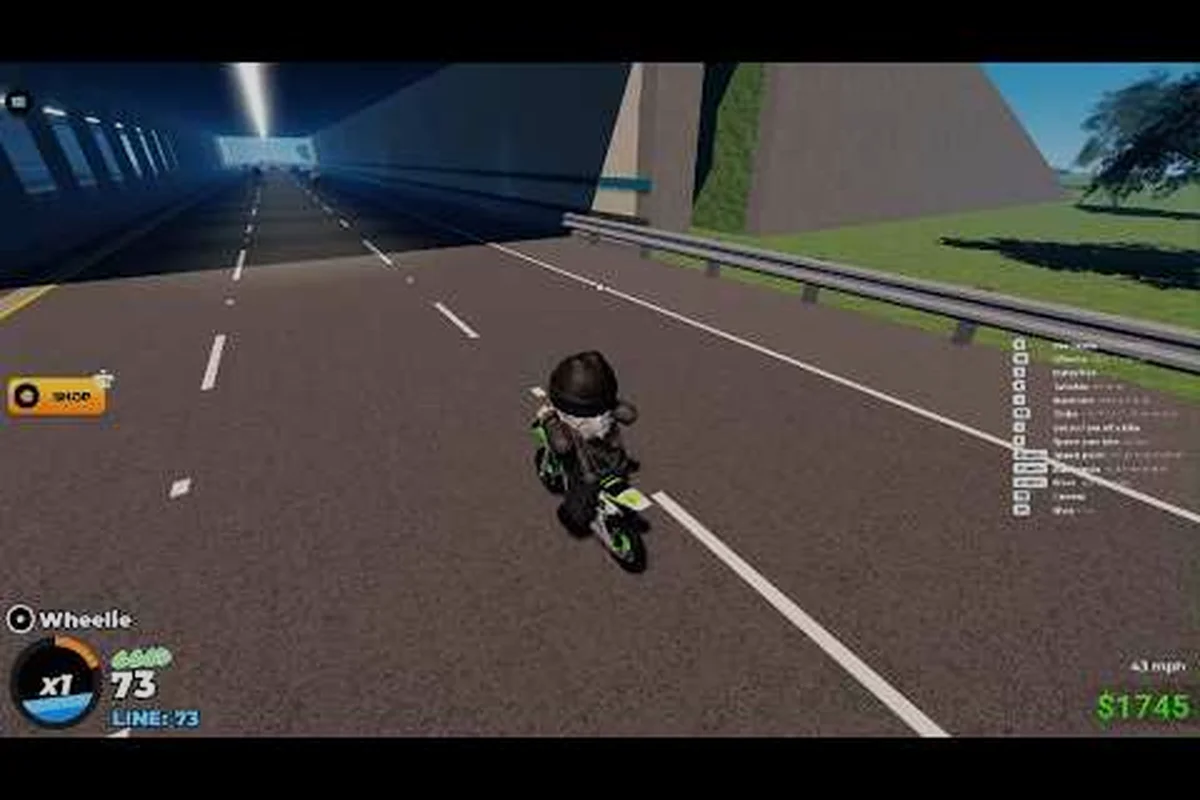
Bike Universe gameplay revolves around a single open-world loop: pick a bike, ride, pull tricks, earn cash, and pour that cash into your next ride. Knowing how that loop fits together is the difference between spending your first hour stuck on the starter frame and cruising toward a tuned build by the end of session two. The Bike Universe Roblox game page describes it as a vehicle-simulation experience where riders cruise an open-world map, collect from the Dirt, Electric, and Pedal families, and tune, customize, and race their bikes.
This guide walks through the structure of Bike Universe gameplay: what the actual objectives are, how the current roadmap of features lines up with your progression path, and what beginner help makes the first sessions feel less like guesswork. All player-count, family, and roadmap details below were pulled from a late-September 2026 snapshot of the official page and the developer group, so treat numbers as a reference point rather than a permanent fixture.
Bike Universe Gameplay Loop and Core Objectives
At its core, Bike Universe gameplay runs on three resources and three actions. The resources are your bike, your cash, and your trick skill; the actions are riding, wheelies, and tricks. Every objective in the game feeds back into one of those actions, and every reward flows back into the next bike upgrade.
What You Actually Do in a Session
A typical first session looks like this: you spawn, accept the starter bike, ride around the map to get a feel for handling, start pulling small wheelies to build the trick meter, and then look for the first cash sink — usually a paint job, a small engine upgrade, or the next-tier bike. Community reports suggest steady riding income is the most reliable source of cash in the first 30 minutes, while wheelies and tricks scale up sharply once you have a bike with better handling.
| Action | Primary Resource Generated | Best Use Case |
|---|---|---|
| Steady riding | Small, reliable cash trickle | Covering travel between objectives |
| Wheelies | Moderate cash, low risk | Filling gaps between trick runs |
| Tricks | High cash in bursts, higher crash risk | Bankroll boosts after you have a stable ride |
| Races | Cash + cosmetic unlocks | Testing an upgraded build |
The game is not very prescriptive about the order in which you do these. That is one reason beginners get stuck — they treat the loop as a checklist when it is actually a triangle where each action supports the other two.
Main Bike Universe Objectives for New Riders
The objectives that matter for the first few hours of bike universe gameplay form a priority chain built around Bike Universe's core progression loop, where each milestone unlocks the next layer of the game: cash gates your first frame swap, a second bike family unlocks the handling-comparison sandbox that most riders need before committing to a build path, and trick combos are the real engine of mid-game income because they scale cash-per-minute far beyond plain riding. Treating them in order — starter frame exit → cross-family test → first combo → cosmetic → race placement — keeps the early hours from stalling on the starter frame's low top-speed ceiling (commonly cited around 28 mph in community testing), which otherwise makes every grind feel twice as long as it should.
-
Earn your first 10,000 in cash through riding and wheelies so you can leave the starter frame behind.
-
Unlock a second bike from a different family (Dirt, Electric, or Pedal) to compare handling and find the style you prefer.
-
Land your first clean trick combo — community guides call this the point where cash income starts to feel meaningful.
-
Customize at least one cosmetic so your bike feels like yours; this is a smaller objective but it keeps morale up during the grind.
-
Win or place top-three in a race to validate that your upgrades are actually paying off.
The Bike Universe Roblox group page (ID 1023905242, owner FJJWolfie3) is the official channel for patch notes, event rotations, and new objective announcements, since in-experience banners often lag a full cycle behind; checking it after each patch — especially around the weekly maintenance windows when cash-drop rates and trick multipliers are frequently tuned — keeps your bike universe gameplay aligned with the current economy instead of grinding against yesterday's numbers.
Bike Families, Bikes, and What Each One Teaches You
Bike Universe splits its roster into three families, and each family trains a different bike universe gameplay skill. Riders who stick to a single branch — for example, only the agile trick bikes — will eventually hit a soft ceiling on bike universe objectives, because time-trial medals and certain stunt-combo contracts reward the stability or endurance profiles that a balanced road or mountain family brings. Cross-training unlocks those gated challenges and keeps your overall performance curve climbing.
Family Handling Styles and What They Teach
| Family | Handling Style | What It Teaches You | Typical First Unlock |
|---|---|---|---|
| Dirt | Loose rear, forgiving on landings | Air control, off-path riding, jumps | Starter frame on most servers |
| Electric | Faster acceleration, heavier frame | Speed management, straight-line cash, races | Mid-tier cash sink around 5,000–8,000 |
| Pedal | Lighter, twitchier, lower top speed | Precision wheelies, tight trick lines, control | Often earned through early objective chains |
The official page confirms these three families plus a customized-build layer on top, and community testing puts the total collectable roster at roughly 15 bikes. That number is not officially confirmed, so expect it to shift as new bikes land in the roadmap.
Why Family Choice Matters for Objectives
Each Bike Universe objective rewards a slightly different handling profile. Races tend to favor Electric for raw acceleration, while trick-heavy challenges almost always favor Pedal because the lighter frame responds faster to mid-air inputs. Dirt sits in the middle, which is why most beginners spend more time on Dirt than they expect — it is the most forgiving family while you are still learning the trick timing.
If you want a deeper walkthrough on getting from the starter frame to a stable mid-game ride, the Bike Universe beginner guide covers the exact upgrade order most players settle on, including when to swap to the Alloy rim (around objective 7) and why the Tire Grip mod outperforms the Speed mod for Trick objectives despite the listed DPS penalty.
Current Bike Universe Roadmap and Feature Timeline
The roadmap is where bike universe gameplay diverges from a static Roblox simulator, and understanding this timeline is essential for planning efficient bike universe objectives. Because the developer ships patches on a rolling schedule, new bikes, trails, and currency mechanics tend to drop in clusters, so the order in which Bike Universe roadmap features arrive directly dictates which objectives are worth chasing in any given month. For example, if a new track expansion arrives before a balance nerf, grinding that track's leaderboard for limited-event currency becomes a higher priority than stockpiling older collectibles.
Roadmap Pillars Visible in the Late-2026 Build
| Pillar | What It Includes | Impact on Gameplay |
|---|---|---|
| Bike roster expansion | New frames across all three families | Resets the "best bike" conversation every patch |
| Map additions | New open-world zones and trick spots | Shifts which riding routes are most profitable |
| Race and event modes | Structured competitions with cash + cosmetic rewards | Gives the trick-economy loop a structured endpoint |
| Quality-of-life updates | Garage polish, server stability, mobile tuning | Indirect but real — fewer disconnects means more cash per hour |
The official page reports 13.1M+ visits, 48.9K active players, and 38K+ favorites on the late-September 2026 snapshot, with support for Desktop, Console, Mobile, and Tablet. Those numbers are worth keeping in mind: an active player base this large is the reason the developer keeps shipping new content on a regular cadence.
How the Roadmap Should Change Your Short-Term Plans
Because the roster is still expanding, the smartest short-term plan is to avoid sinking every dollar into one bike. Keep at least 20–30% of your cash reserve flexible so you can pivot when a new frame drops. Community testing on the developer group's announcements suggests new bikes tend to land with a short "launch window" where they are over-tuned relative to the rest of the roster, which makes early adoption rewarding for a week or two.
Beginner Help: What the First Three Hours Should Look Like
Beginner help for Bike Universe gameplay is mostly about avoiding the three traps new riders fall into: spending cash on cosmetics before the second bike, ignoring the trick meter, and grinding one riding route until burnout. The order below is the one most players arrive at by accident; following it on purpose just shaves a few hours off the curve.
The First-Hour Checklist
-
Stay on the starter frame long enough to learn the wheelie timing — the input is different on controller versus keyboard, and rushing past the starter is the most common early mistake.
-
Bank your first wheelie cash instead of spending it on small cosmetics; the next bike is a bigger cash-per-hour upgrade than any paint job.
-
Open the map and find two trick spots you can chain — this is the foundation of every later trick run.
-
Join the developer group so patch notes and roadmap updates show up directly rather than through secondhand sources.
A Simple First-Three-Hours Plan
| Time Block | Main Action | Cash Goal | Bike State at End |
|---|---|---|---|
| Hour 1 | Riding + wheelies on the starter frame | ~3,000 | Starter, no upgrades |
| Hour 2 | Trick practice + first cheap upgrade | ~8,000 | Starter + small engine or cosmetic |
| Hour 3 | First non-starter bike (usually Dirt or Pedal) | ~15,000 | Two-bike garage, family unlocked |
This is a rough plan based on community testing, not an official progression path. The game does not hand you a timer, and some players will hit 15,000 in 90 minutes while others take five hours, depending on how aggressive their trick runs are.
For a more granular walkthrough of what to do in the first 20 minutes, the Bike Universe what to do first guide lines up well with this section — it expands the Hour 1 wheelie loop into a step-by-step cash curve, calls out which starter-bike tricks pay the most before any engine upgrade, and explains the trick-chaining multiplier that pushes riders from the ~3,000 baseline toward the Hour 2 ~8,000 threshold without burning a single part slot.
How Objectives, Roadmap, and Beginner Help Fit Together
The reason these three topics belong in one article is that they are not really separate. Bike Universe objectives are the short-term targets, the roadmap is the long-term shape of new content, and beginner help is the bridge that gets you from a confused first session to a player who can plan around the next patch.
A Quick Mental Model
Think of it as three layers stacked on top of each other, where the bottom layer (objectives) tells you what to chase this week, the middle layer (roadmap) tells you what new content the developer is about to drop, and the top layer (beginner help) gives you the small, repeatable habits that make sure your weekly bike universe objectives don't drift away from the monthly bike universe roadmap — so every cash goal, family-of-bikes unlock, and race finish actually compounds into the next zone, race, or mode instead of resetting each patch.
-
Objectives = what you are doing this week (earn cash, unlock bike, win a race).
-
Roadmap = what the developer is doing this month (new bike, new zone, new mode).
-
Beginner help = the habits that keep your week and month aligned (cash reserve, family variety, group membership).
When those three layers line up, Bike Universe gameplay stops feeling like a grind and starts feeling like a series of small goals that roll into bigger ones. When they fall out of alignment — usually because a player ignores the roadmap and over-commits to one bike — progression stalls.
One External Anchor Point
The Bike Universe beginner walkthrough by Radex Tips is a useful visual reference if you want to see the trick-input timing in action. Pair it with the a TonyCool video for a second perspective on how different players approach the first cash grind. Both are community creators, so treat any specific bike recommendations as a snapshot rather than a permanent tier list.
Frequently Asked Questions
What is the main objective in Bike Universe gameplay?
The main objective is to earn cash through riding, wheelies, and tricks, then spend that cash on the next bike in your family of choice. The loop is intentionally simple so the progression is the content, and most players set their own short-term targets (first non-starter bike, first trick combo, first race win) within that loop.
How many bikes are in Bike Universe right now?
The official page confirms three families — Dirt, Electric, and Pedal — plus a customized-build layer. Community estimates put the total collectable roster at roughly 15 bikes, but that number is not officially confirmed and tends to grow each patch, so treat it as a moving target rather than a hard cap.
Where can I find the latest Bike Universe roadmap updates?
The developer group on Roblox (group ID 1023905242, run by FJJWolfie3) is the primary channel. The official game page also surfaces major updates, and joining the group is the cleanest way to get patch notes without relying on secondhand posts.
Is Bike Universe beginner-friendly for players new to Roblox simulators?
Yes, mostly. The starter frame is forgiving, the first cash goal is reachable in under an hour, and the controls work on controller, keyboard, and touch. The main learning curve is the trick timing, which takes a few sessions to feel natural regardless of platform.
Can I play Bike Universe with friends?
Yes. The game supports multiplayer servers across Desktop, Console, Mobile, and Tablet, so you can join the same server as friends. Trick combos and races are noticeably easier to coordinate with a second rider, and the social side is a big part of why the active player count has stayed high through 2026.